GALLERY
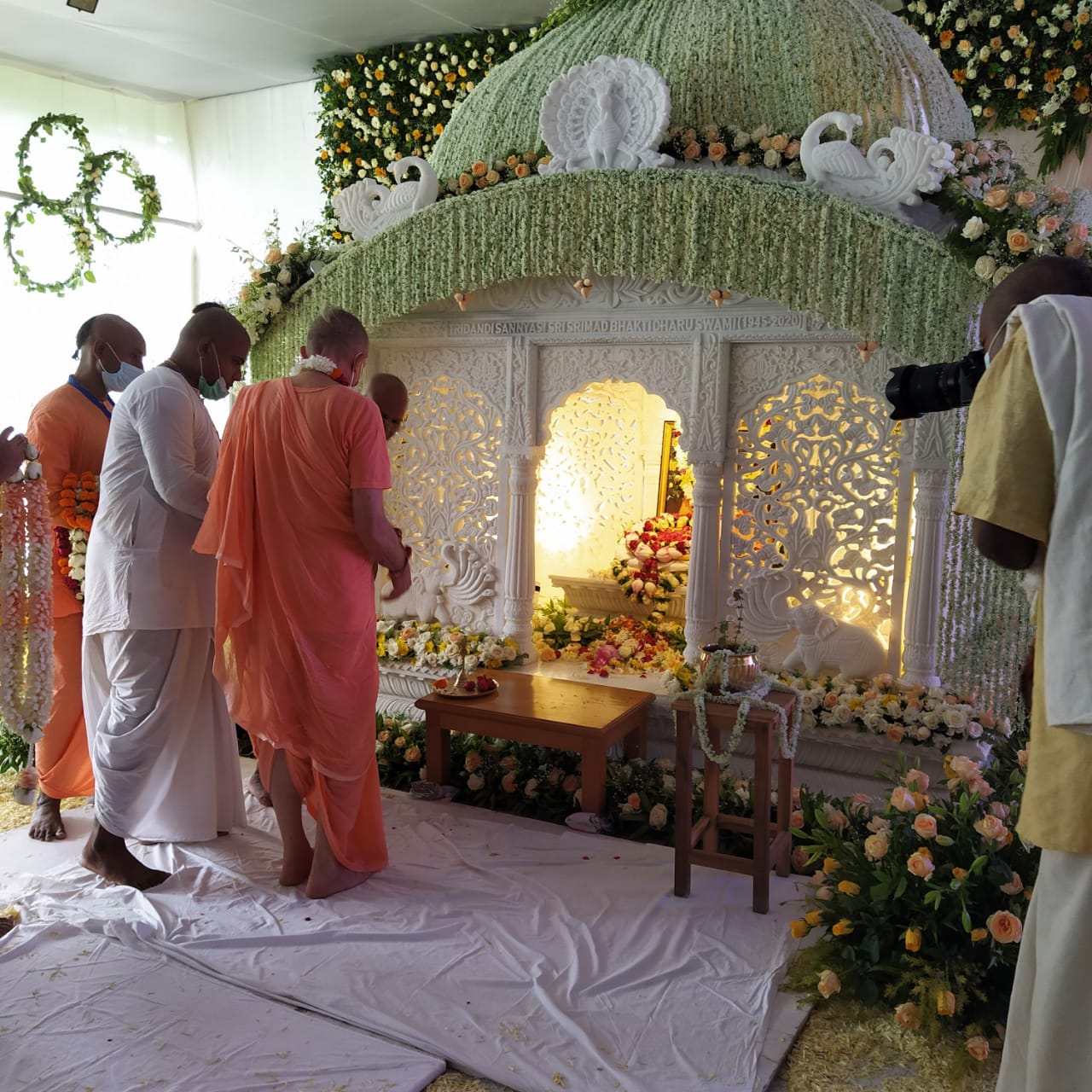
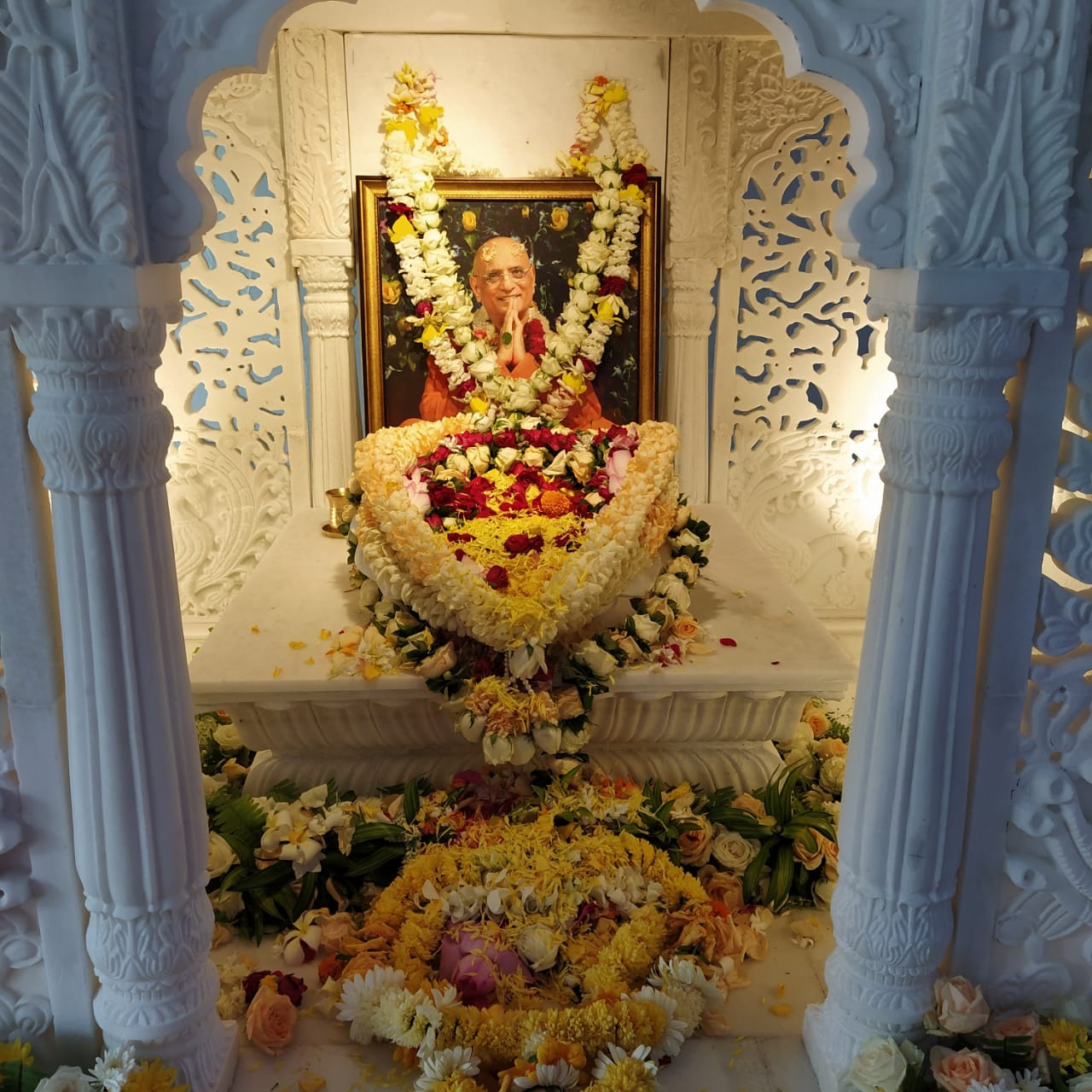
Beauty of the Samadhi
To He whose Heart is made of Gold
“We offer this song sung in stone”
yas tuṣṭātmā sphutam anupaṭhec chraddhayā śuddhayāntar
medhyaḥ padyāṣṭakam acaṭulaḥ suṣṭhu govardhanasya
sāndraṁ govardhana-dhara-pada-dvandva-śoṇāravindaṁ
vindan premotkaram iha karoty adri-rāje sa vāsam
May a person who with faith, attention, and a pure and cheerful heart, reads these eight verses glorifying Govardhana Hill, reside by that king of mountains and find there intense, pure love for the red lotus feet of the lifter of Govardhana Hill.
(Dvitīya Govardhanāṣṭakam 9)
A State of Loving Seperation
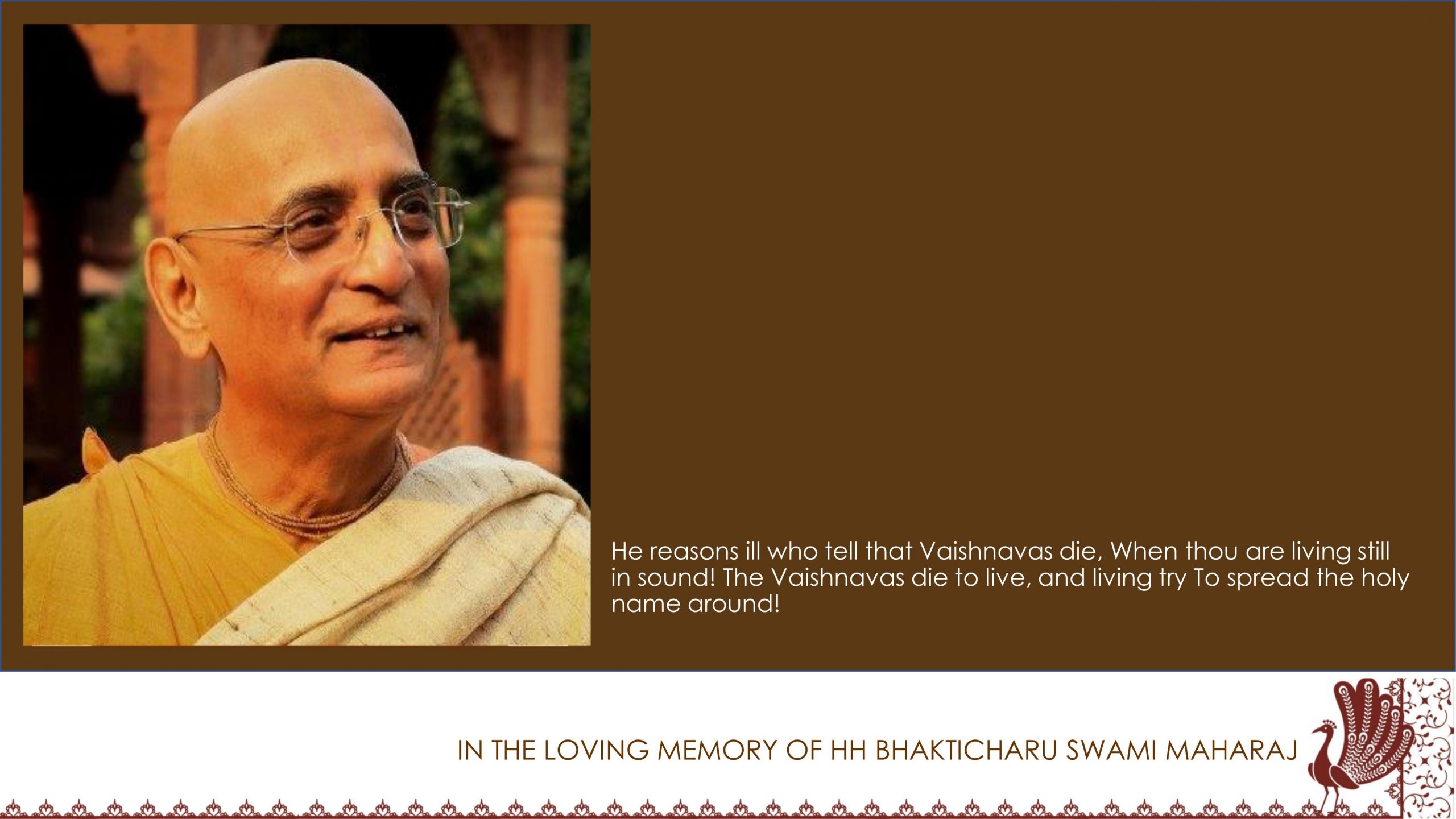
Written by Śacītanuja Dāsa, a disciple of His Holiness Rādhānātha Mahārāja and an architect for the TOVP, who sincerely designed His Holiness Bhakti Charu Mahārāja’s samādhi in Māyāpura, despite his professional engagements at Cushman & Wakefield.On 4th of July, 2020 the whole world celebrated Guru-pūrṇimā, paying respects and homage to the guru who is the representative of Śrīla Vyāsadeva. It was also the day when all the Vrajavāsīs commemorated their love and respect for their guru, Śrīla Sanātana Gosvāmī, by performing Govardhana parikramā. That day also marked the occasion which plunged the entire ISKCON world into a state of loving separation from their most beloved leader guru, Śrīla Bhakti Charu Mahārāja. That fateful day was saturated with mixed emotions. The sadness of separation and simultaneously the joy of his loving reunion with his beloved spiritual master, Śrīla Prabhupāda, in the spiritual world.
Design of the Samadhi
After Śrīla Bhakti Charu Mahārāja departed there was an unimaginable outpouring of intense despair and grief by the worldwide devotee community. Later, when Mahārāja’s vapu was placed in samādhi in Māyāpura, his dear godbrother Ambarīṣa Prabhu along with his good wife Mother Svāhā Devī offered to build the samādhi temple.
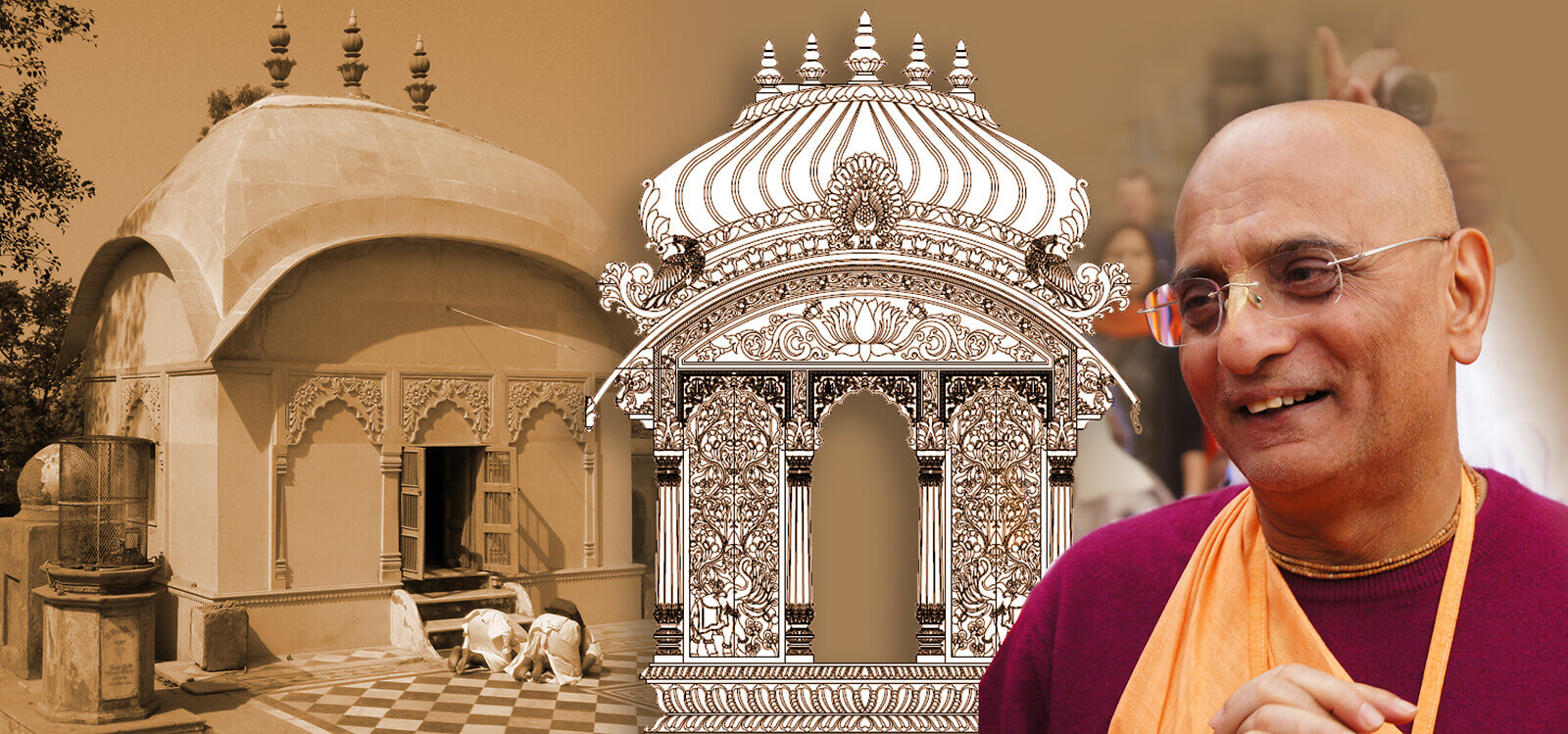
The inspiration for the samādhi of Śrīla Bhakti Charu Mahārāja was an artistic representation carved in stone and simultaneously a story, or a song, sung in stone. It was envisioned that the structure would speak to visitors and pilgrims alike for all time in a way just befitting the personality of Mahārāja. The intention was to commemorate these transcendental auspicious events, thereby, inspiring the design of the samādhi of this gentle, loving and towering personality.
To tell this subtle, yet deeply profound story – a song sung in stone – several different themes were woven into the design.
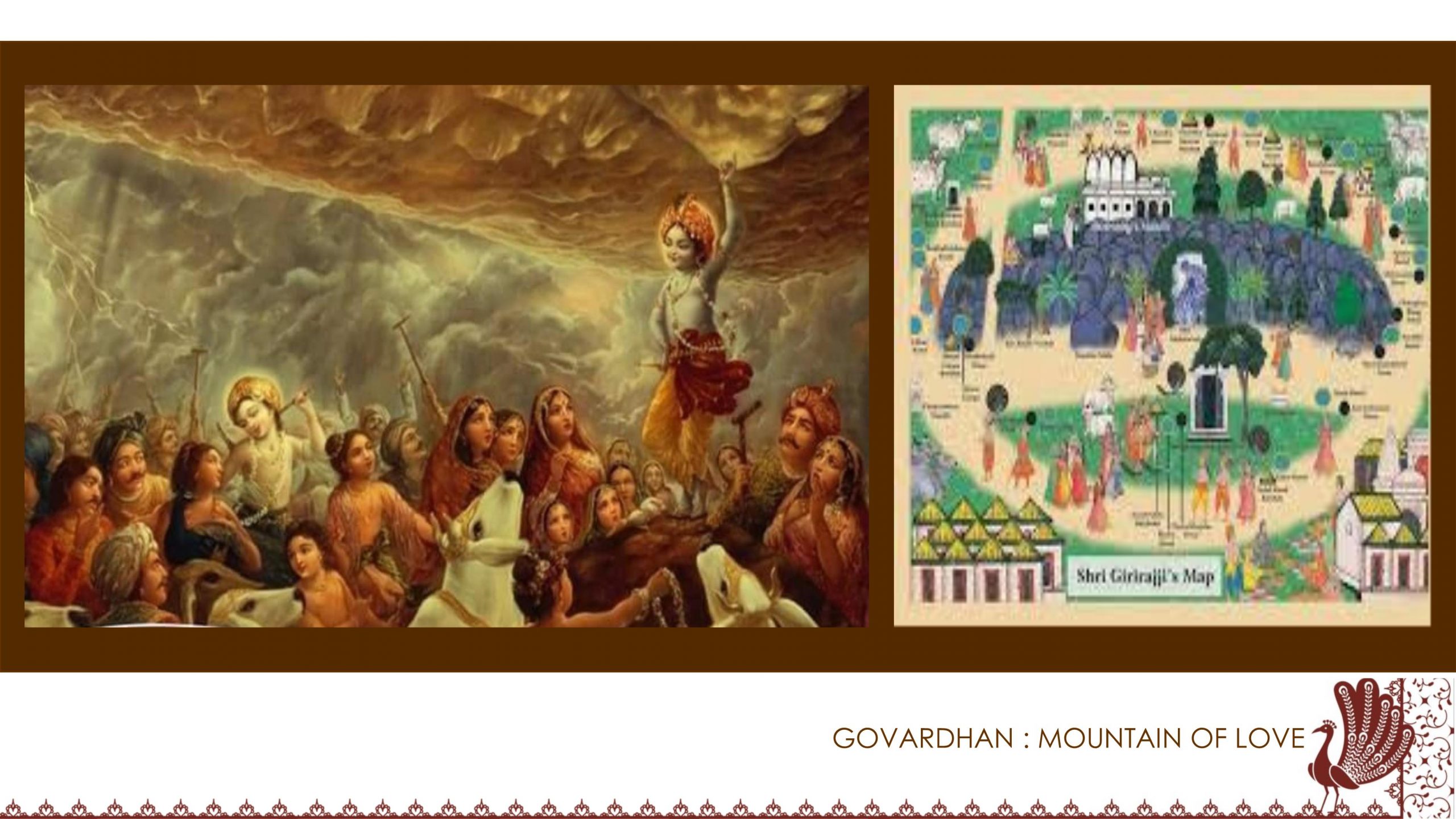
GOVARDHANA: THE MOUNTAIN OF LOVE
This theme was incorporated into the design because on the disappearance day of Śrīla Bhakti Charu Mahārāja, all the Vrajavāsīs circumambulate the Govardhana Hill. Therefore, whoever visits the samādhi, whilst circumambulating, will engage in Govardhana parikramā. In this way they will come into contact with:
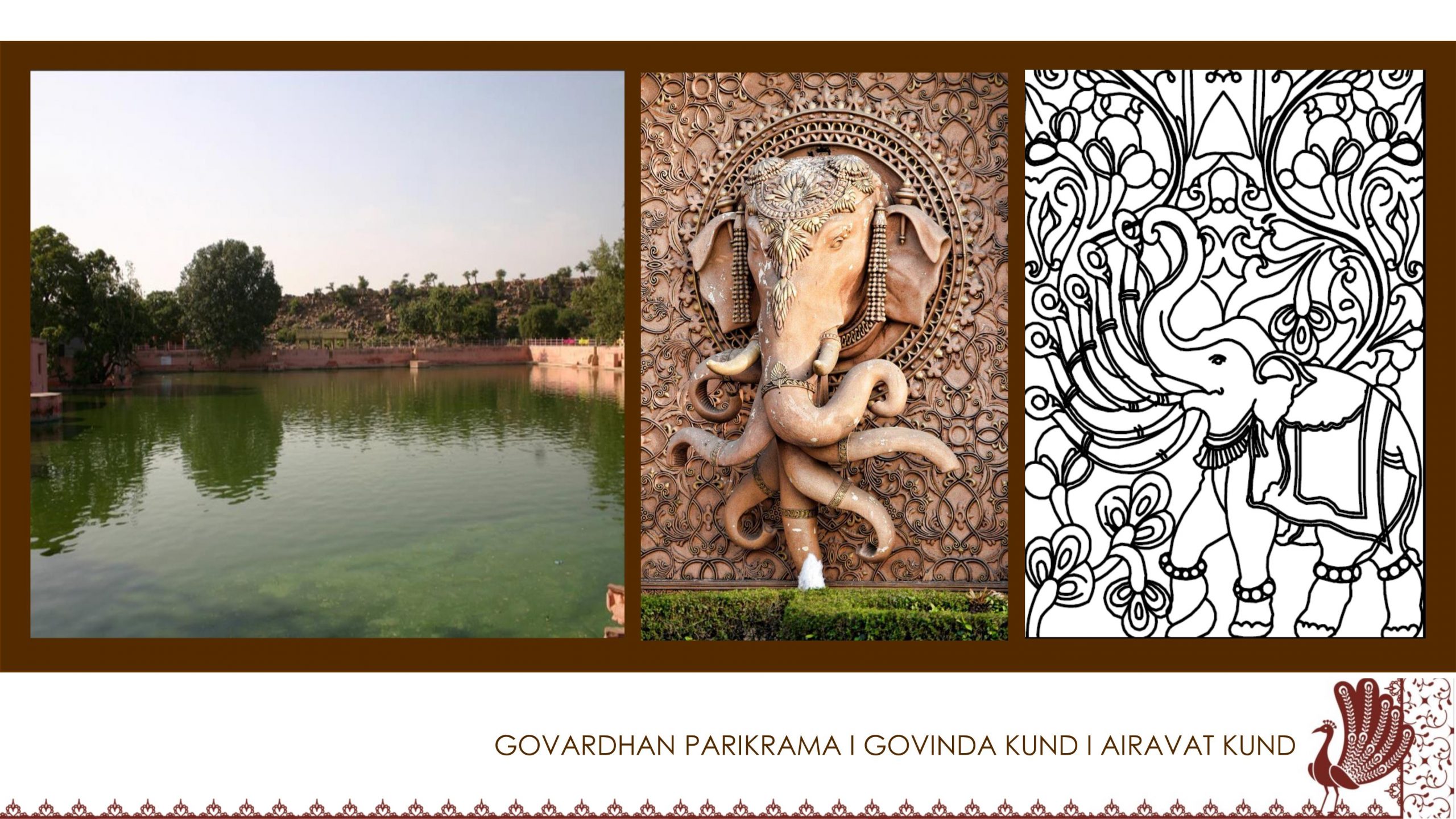
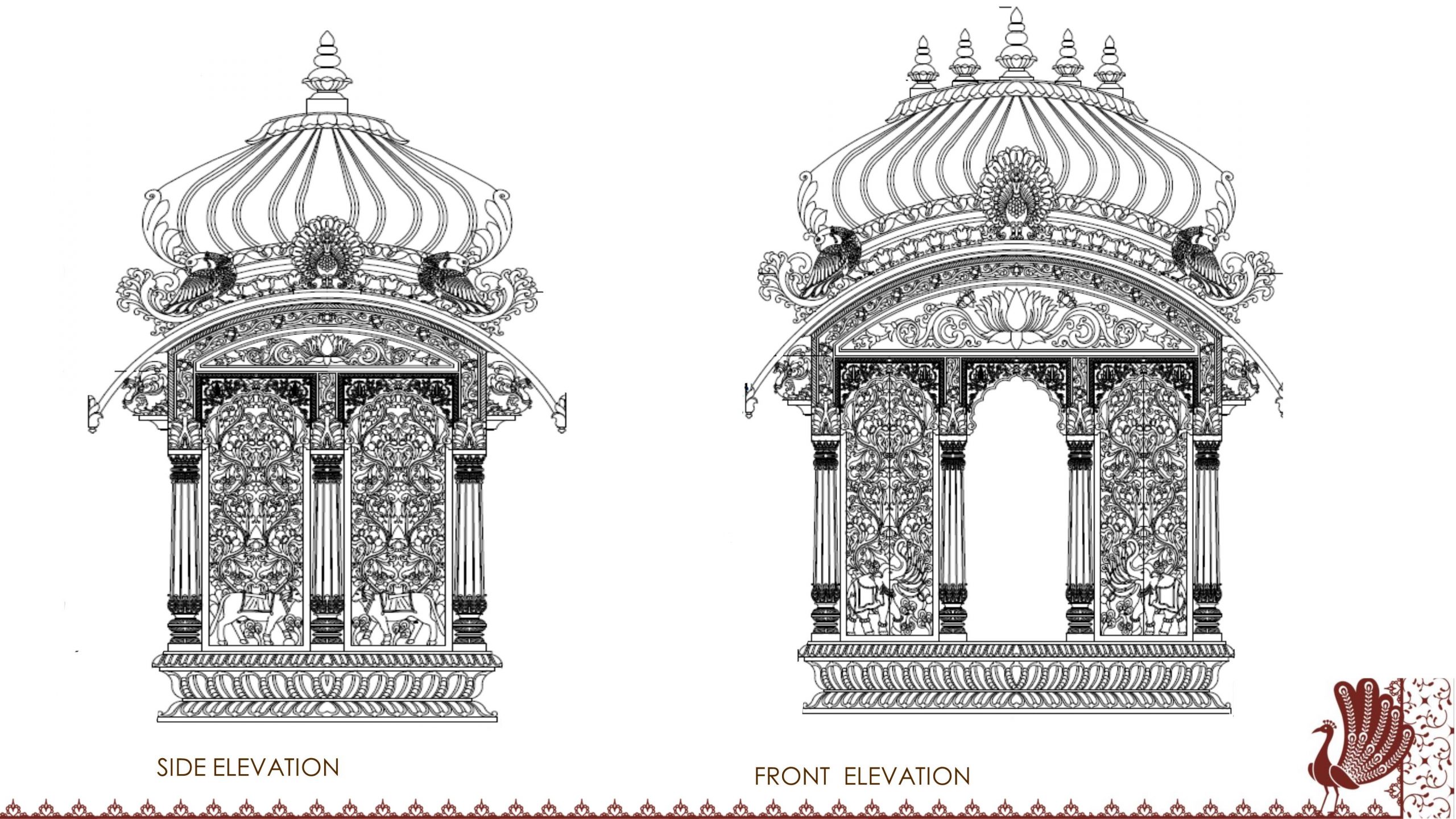
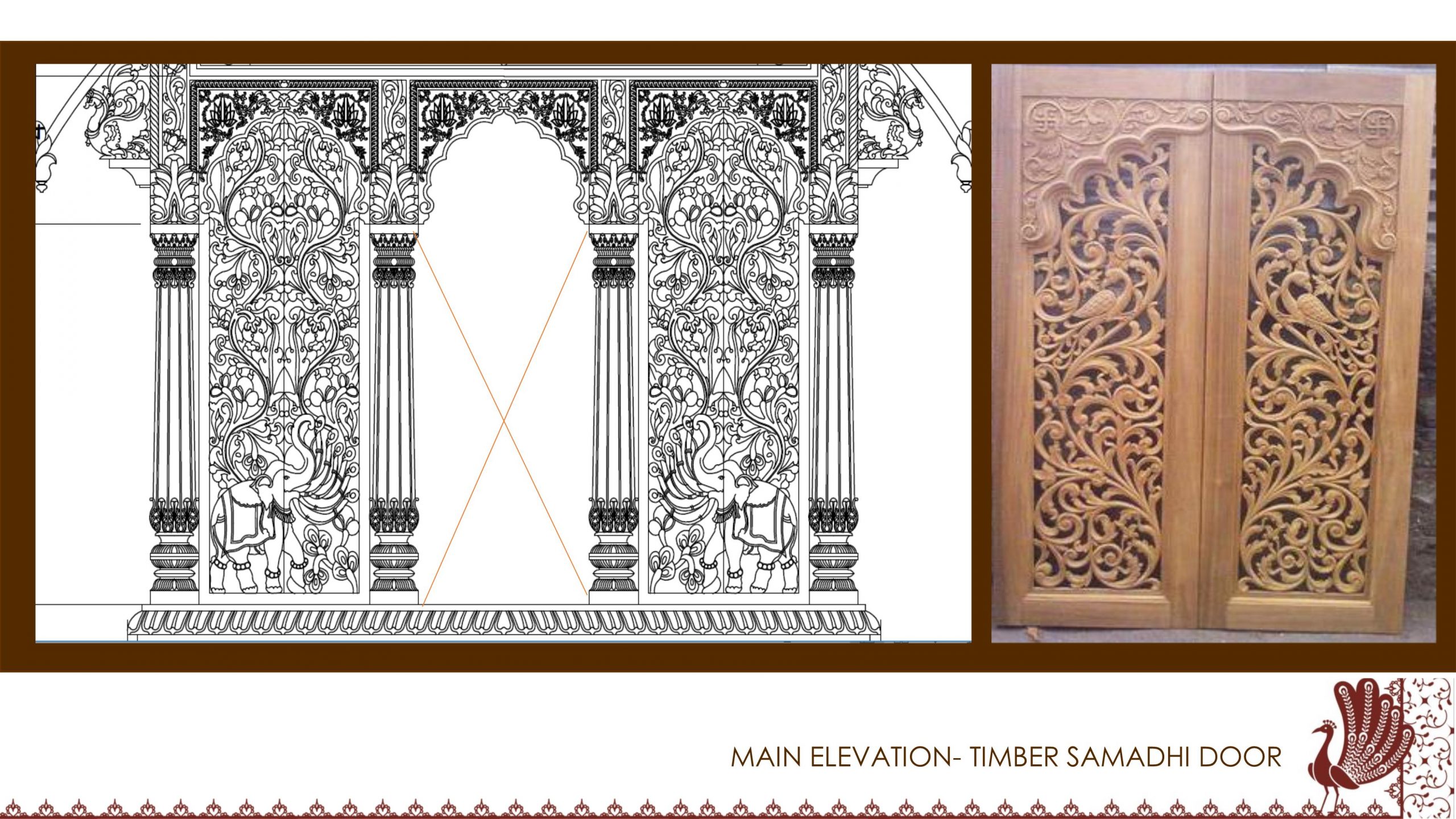
Airāvata-kuṇḍa, as Airāvata adorns the entrance with his many trunks, performing abhiṣekha of Govinda.
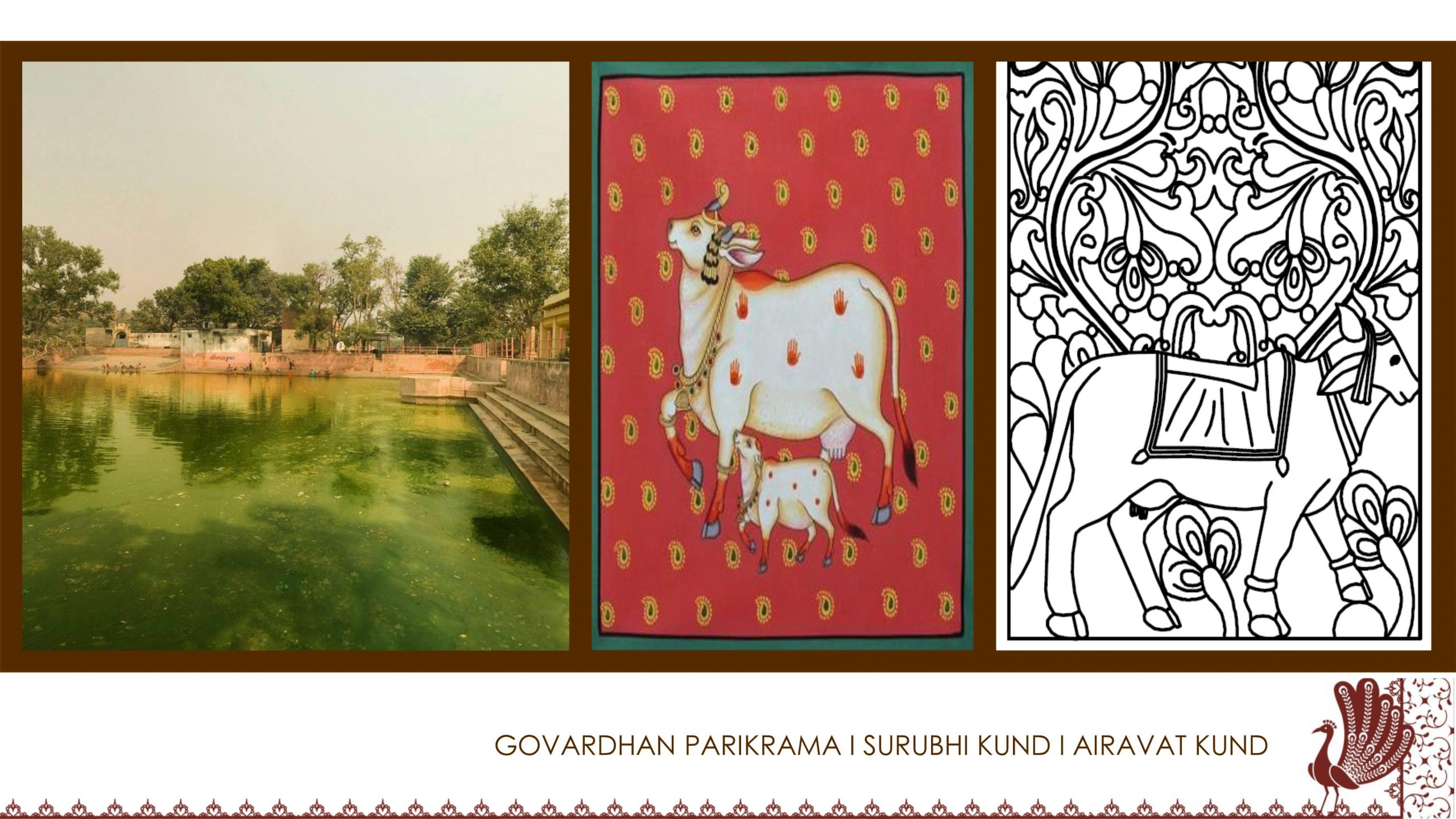
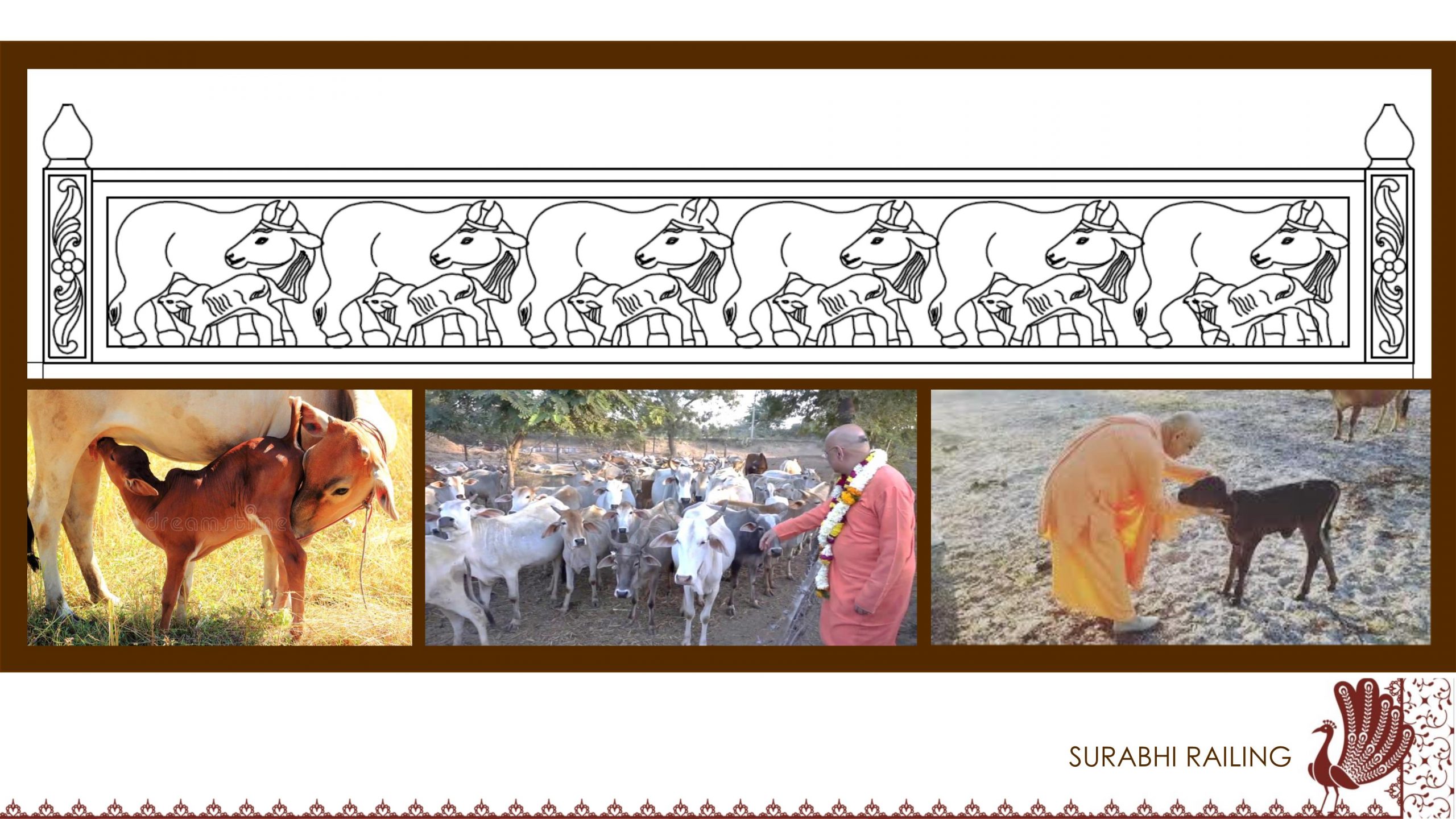
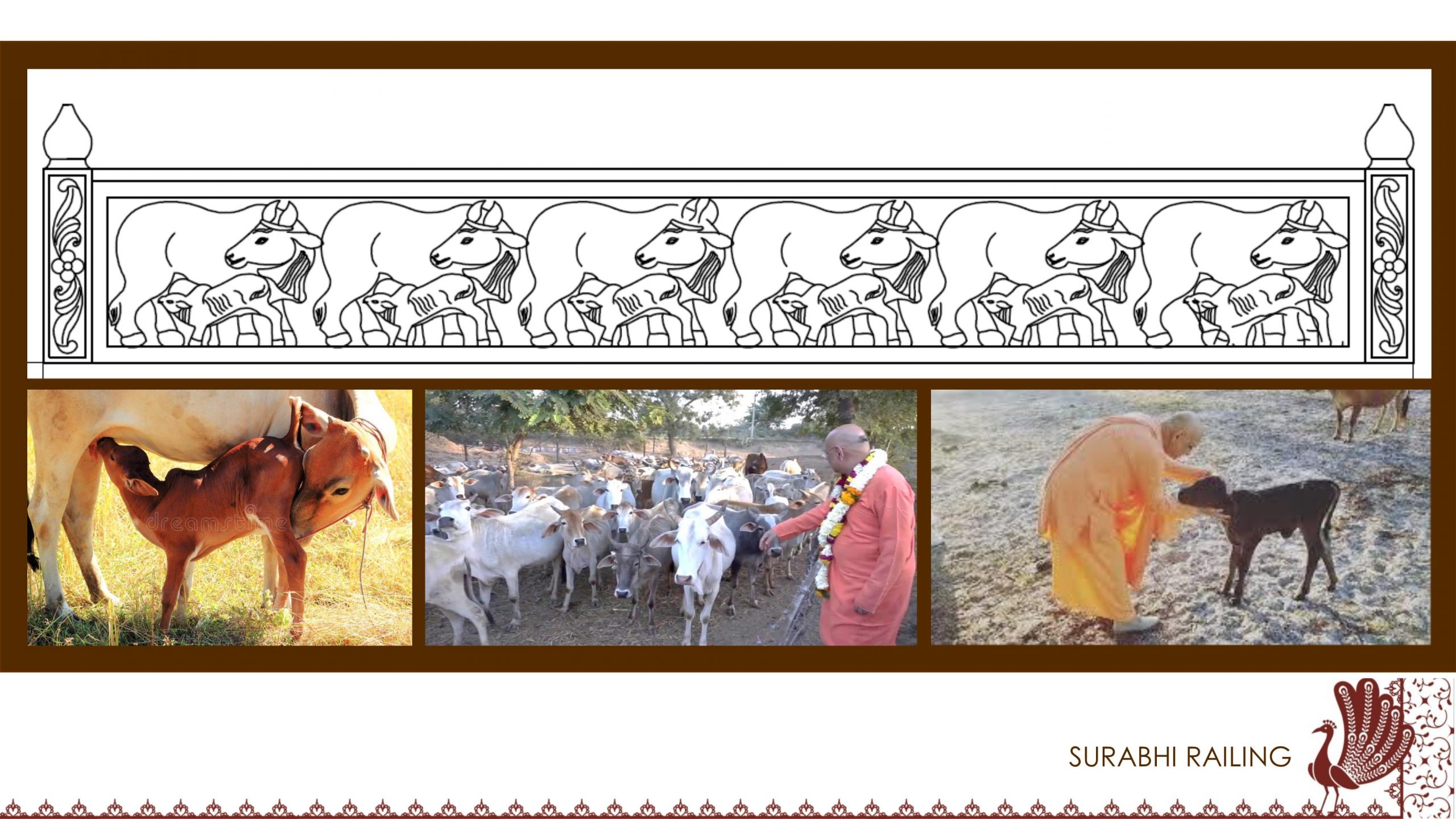
Surabhi-kuṇḍa, as Surabhi along with her calf beautifies the side elevation panels.
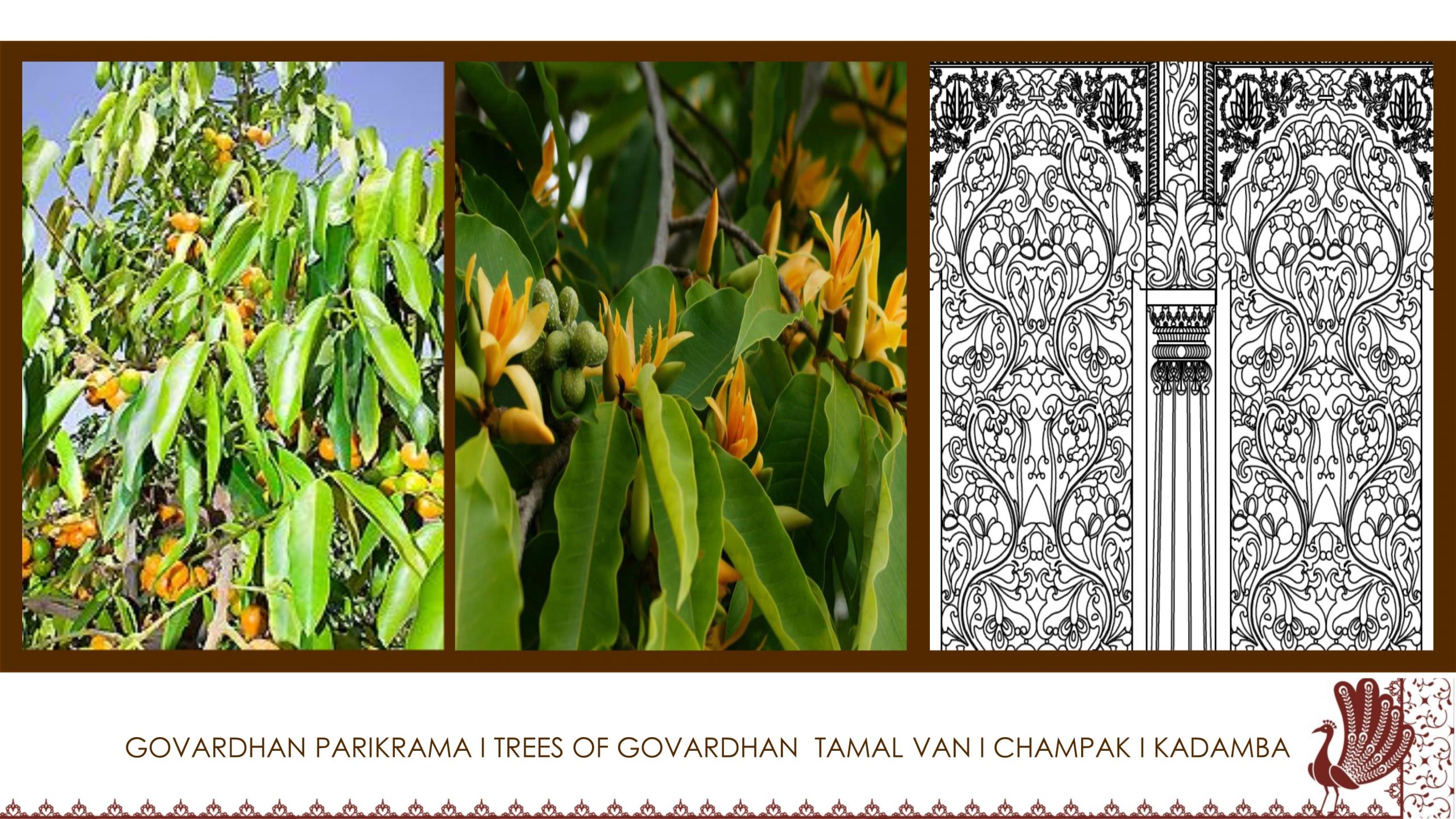
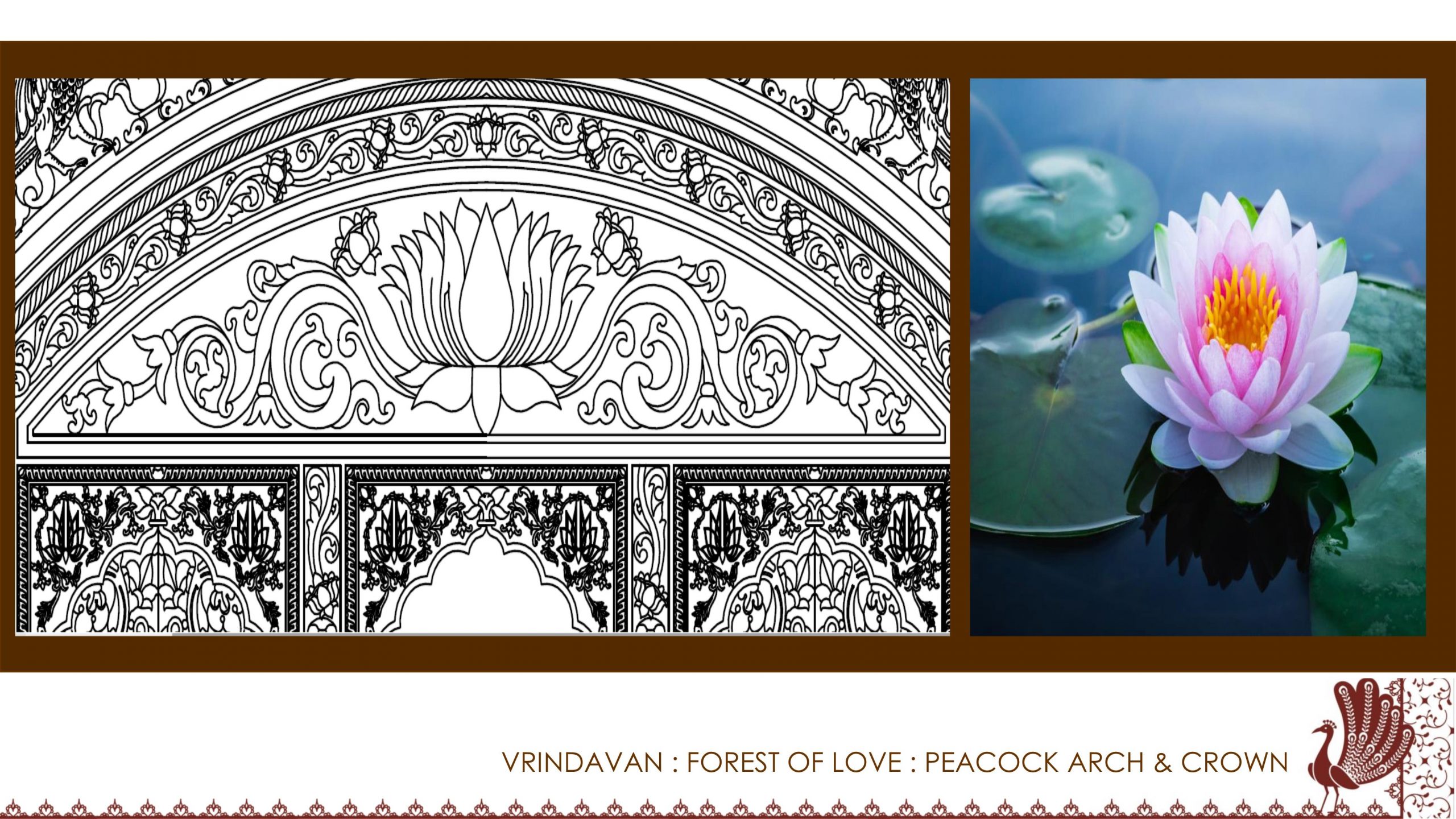
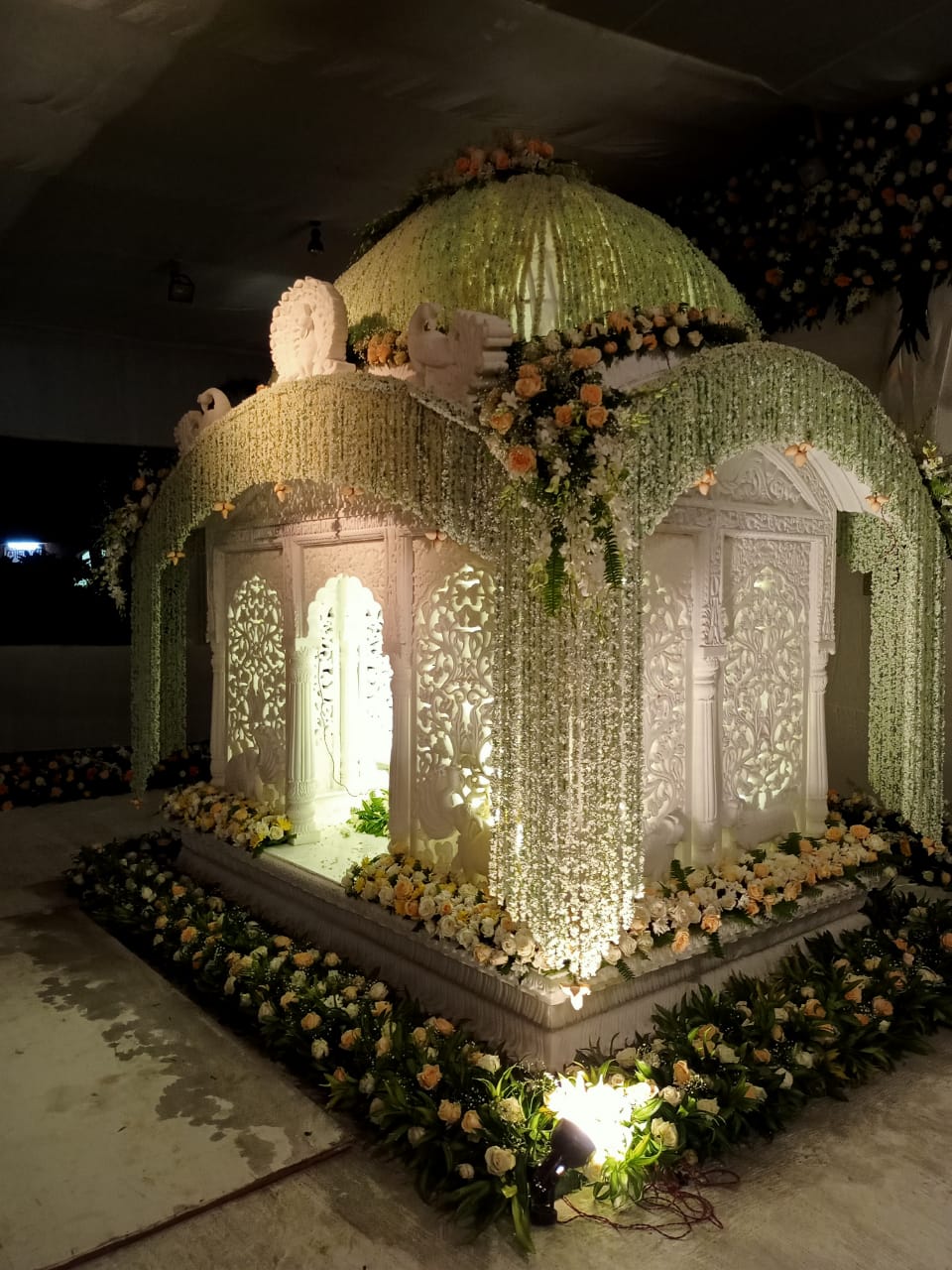
The flora of Govardhana, as the partially open marble screens of the jali on all three sides of the samādhi, subtly suggest the trees of Govardhana, such as those found in Campakavana and Tālavana. The semipermeable nature of the jali allows natural light to illuminate the inner sanctum. In this way, throughout the day the changing light conditions and subtle variations create a constantly evolving aesthetically pleasing environment. In addition, the artistic representative element of lotus ponds forms the crown of the entry into the facade of the samādhi.
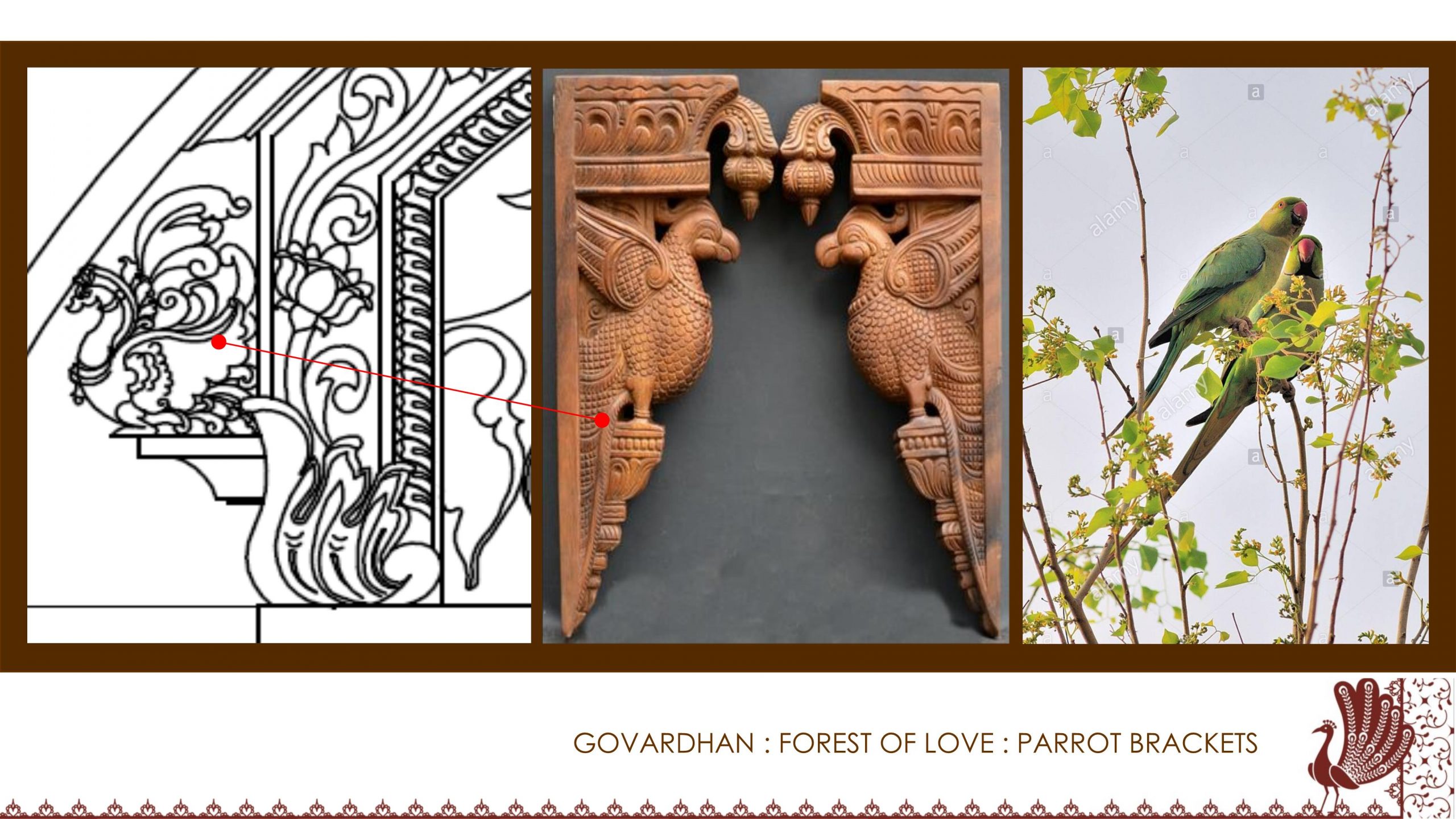
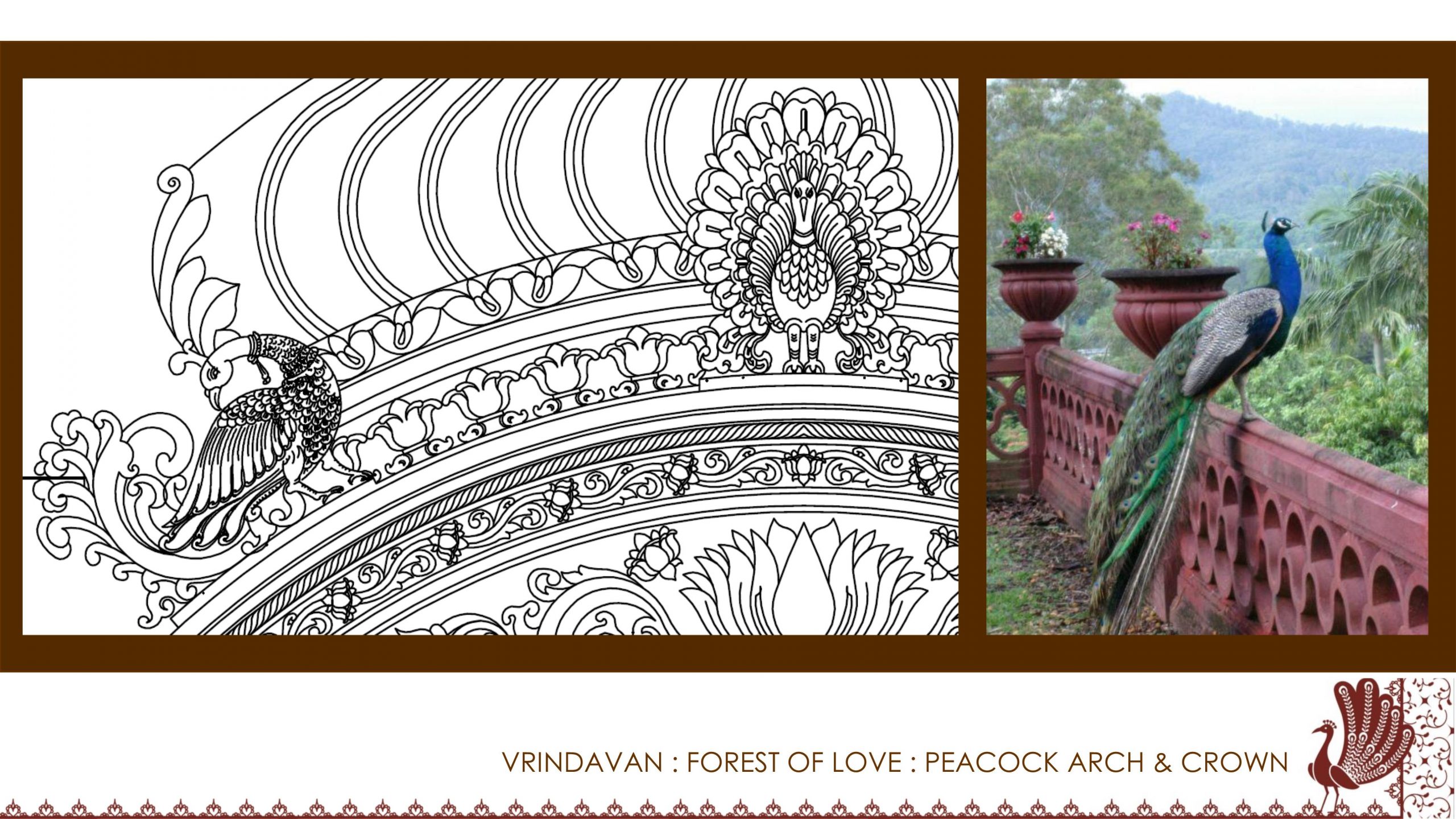
The fauna of Govardhana, as the beautiful fauna of Govardhana finds subtle expression within the samādhi through the parrots that form the brackets supporting the dome arch and the peacocks that adorn the dome on all four sides, as if crowning the glory of the structure.
BARṢĀNĀ: THE TRANSCEDENTAL MOODS OF DIVINE LOVE
Whilst the theme of Govardhana finds expression in the front and sides of the samādhi structure, the rear panel indicates Mahārāja’s deep desire to eternally reside in Barṣāṇā after his departure from this world. This desire was revealed through his disciples and therefore, they requested that the rear panel be used to integrate the theme of Barṣāṇā into the samādhi.
Although the famous four mountains and Śrījī Mandira of Barṣāṇā have not been directly represented within the design, it was envisioned that the theme of the transcendental moods of divine love of Barṣāṇā dhāma would be integrated into the rear panel. These transcendental moods are expressions of loving exchange between Śrī Śrī Rādhā-Kṛṣṇa at three places of pilgrimage within Barṣāṇā. These places have been depicted in the form of two peacocks and indicate:
Māna Mandira – The loving mood of transcendental anger.
One peacock bends in supplication, seeking forgiveness, whilst the other turns away in anger.
Ghevara Vana – The loving mood of transcendental separation.
Upon seeing the bumble bee fly away the two peacocks feel inconsolable separation, even though they are adjacent to each other.
Mora-kuṭīra – The loving mood of transcendental union.
The two peacocks dance in the ecstatic union of love for each other.
In this way the mood of absorption and service of Śrīla Bhakti Charu Mahārāja align with the transcendental moods of Barṣāṇā.
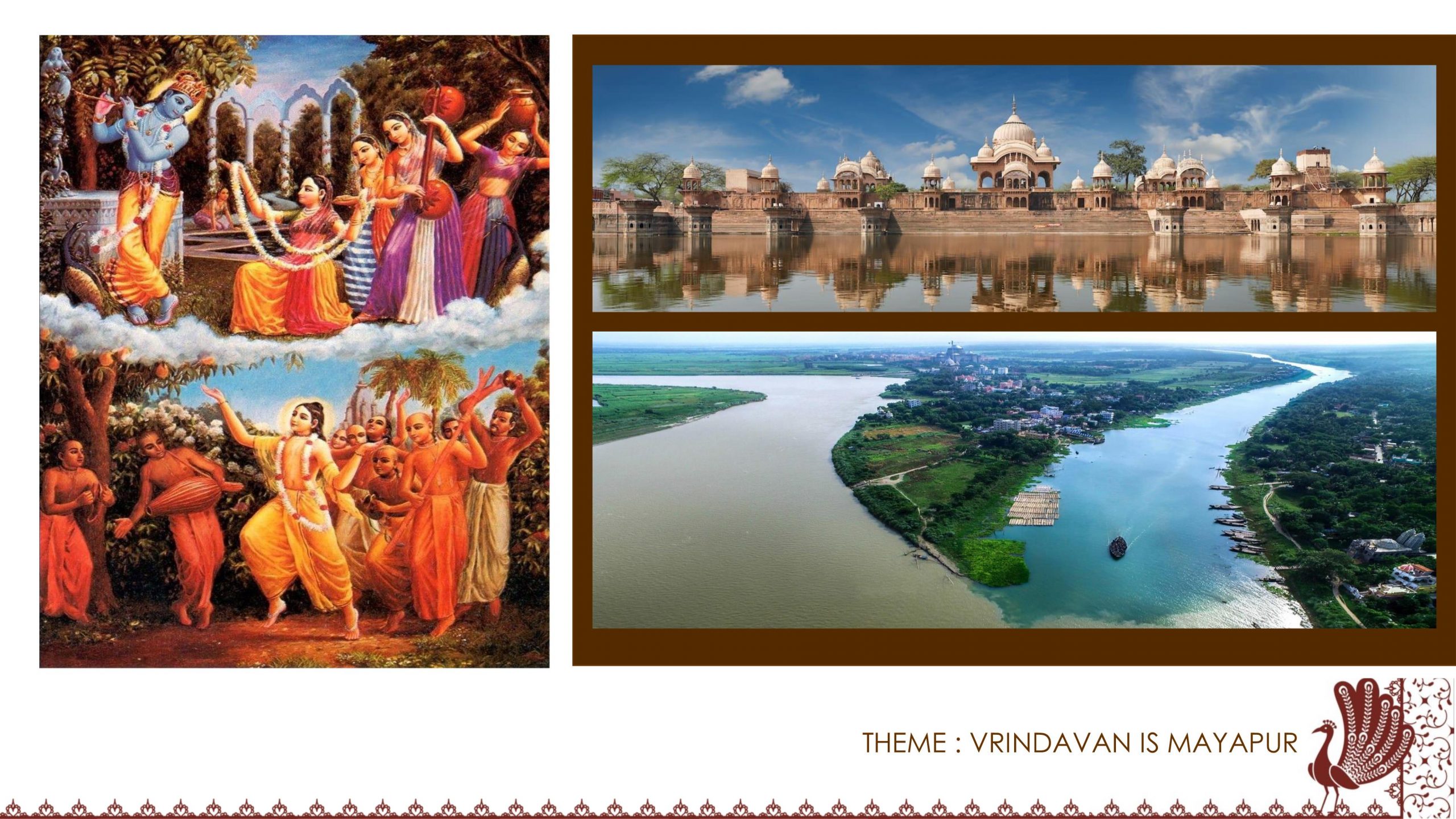
VṚNDAVANA IS MĀYĀPURA IS BARṢĀNĀ
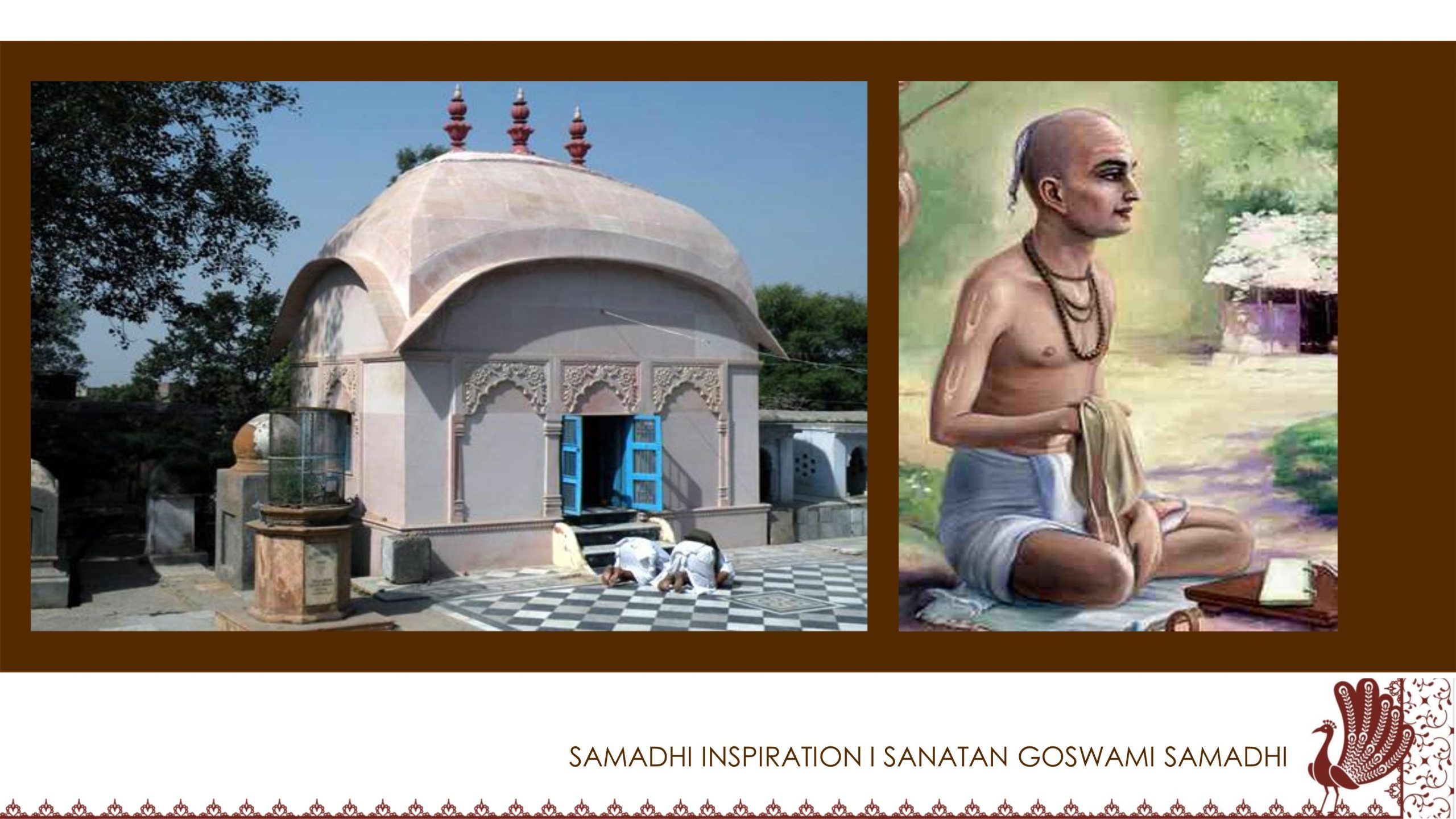
The entire concept and design of the samādhi is inspired by the architectural style of Vraja dhāma, and particularly the form of the samādhi of Śrīla Sanātana Gosvāmī. This concept is augmented and complimented by the use of Makrana marble which was Mahārāja’s favourite stone.
Each of these themes in the form of musical notes of architecture and spiritual resonance are woven into the song in stone that encompasses the samādhi in Māyāpura. These three principal pilgrimage places of the Vaiṣṇavas embrace the mood and mission of Śrīla Bhakti Charu Mahārāja.
From the core of our hearts, we would like to thank His Grace Ambarīṣa Prabhu – who graciously offered to build the samadhi, His Grace Braja Vilāsa Prabhu – who tirelessly coordinated and supported every detail of this endeavour, and the committee of disciples of Śrīla Bhakti Charu Mahārāja for providing us an opportunity to serve Mahārāja in this most intimate and loving way.
We pray that this offering will be well received by Mahārāja, his disciples and the larger community of devotees. We also humbly seek blessings from all so that we can walk on the journey of Kṛṣṇa consciousness and continue to serve in the mission of our beloved His Divine Grace A.C. Bhaktivedanta Swami Prabhupāda, our ever well-wisher.
PHOTOS

Samadhi4

Samadhi3
Samadhi2
Samadhi1
VIDEOS